Research Report
Effects of Polyethylene Color and Thickness on the Retention of Some Minerals, Vitamins, and Antioxidant Activities of Stored Plantain (Musa paradisiaca) Flour 
 ,
Olufemi Samson Salami2
,
Olufemi Samson Salami2  ,
John Isa3 ,
Omolola Victoria Adefela1 ,
Mary Anuoluwapo Ajatta1
,
John Isa3 ,
Omolola Victoria Adefela1 ,
Mary Anuoluwapo Ajatta1 2 Department of Biotechnology and Molecular Biology, Federal University of Health Science, Ila-Orangun, P.M.B. 204, Osun State, Nigeria
3 Department of Agricultural and Environmental Engineering, Federal University of Technology, Akure, P.M.B. 704, Ondo State, Nigeria
Author Correspondence author
Plant Gene and Trait, 2026, Vol. 17, No. 4 doi: 10.5376/pgt.2026.17.0018
Received: 10 Jul., 2026 Accepted: 12 Aug., 2026 Published: 22 Aug., 2026
Olufemi-Salami F.K., Salami O.S., ISA J., Adefela O.V., and Ajatta M.A., 2026, Effects of polyethylene color and thickness on the retention of some minerals, vitamins, and antioxidant activities of stored plantain (Musa paradisiaca) Flour, Plant Gene and Trait, 17(4): 255-263 (doi: 10.5376/pgt.2026.17.0018)
Food packaging is critical for sustaining nutritional and functional quality of stored food. Polyethylene serves as a major packaging material in food industries. However, empirical evidence regarding how specific polyethylene characteristics dictate micronutrient stability during storage remains scarce. This study evaluated the effects of polyethylene color (black vs. transparent) and gauge thickness (0.03 mm vs. 0.15 mm) on the retention of essential minerals (Fe, Ca, Zn, P), vitamins, and antioxidant properties in stored plantain flour. French plantain (Musa paradisiaca) fruits were obtained, processed into flour. Samples of flour were packaged and stored under ambient conditions of 25 ± 5 ℃ temperature and 75 ± 5% relative humidity for 4 weeks in the laboratory. After the storage period, standard assays were used to quantify Fe, Ca, Zn, P, vitamins, and antioxidant properties in stored plantain flour. The results showed that both packaging color and thickness significantly influenced (p < 0.05) nutrient retention in the stored flours. Vitamin B6 was better preserved in black high-density polyethylene (BHP), whereas vitamin B9 stability was maximized in transparent high-density polyethylene (THP). Flour stored in transparent low-density polyethylene (TLP) exhibited the highest 2,2-diphenyl-1-picrylhydrazyl (DPPH) radical scavenging activity (664.65 mg/kg) but the lowest total phenolic content (36.86 mg/kg). The preservation of Fe, Ca, and P was observed to be better in BHP. These findings demonstrate that no single packaging configuration optimally preserved the entire nutritional indices monitored; rather, packaging optimization must be strategically aligned with the specific target micronutrients of interest.
1 Introduction
Plantain (Musa paradisiaca) serves as a foundational staple crop across tropical and subtropical regions, particularly within West and Central Africa, the Caribbean, and South America (Ajijolakewu et al., 2021). The crop is vital to household food security, rural and peri-urban economic sustainability (Abiola et al., 2024). Plantains are regularly converted into various value-added products, including pastes, chips, and flours (Udomkun et al., 2021). Plantain flour has attracted considerable research and commercial interest due to its prolonged shelf stability, ease of transportation, nutritional value and versatility in food formulation (Mundéné‐Timothée et al., 2025). Notably, it represents a functionally viable gluten-free alternative to wheat flour and is extensively utilized in traditional thick pastes (“swallow”), porridges, and functional bakery products. Moreover, its low glycemic content makes it appealing to diabetic patients (Mundéné‐Timothée et al., 2025).
Biochemically, plantain is a rich matrix of carbohydrates, dietary fiber, essential minerals, and diverse bioactive compounds. It contains structurally and metabolically significant concentrations of iron (Fe), calcium (Ca), zinc (Zn), and phosphorus (P), which modulate hematopoiesis, skeletal mineralization, enzymatic catalysis, and systemic metabolic homeostasis (Rotimi and Adeyemi, 2023a). Plantain fruit is rich in nutrients, it provides carbohydrates, dietary fiber, vitamins A, C, and B6, and vital minerals like potassium and magnesium (Emmanuel et al., 2025; Taak and Awasthi, 2025). Beyond basic nutrition, plantains are exceptionally high in bioactive antioxidants, including carotenoids, flavonoids, and vitamin C. These powerful compounds combat oxidative stress by neutralizing harmful free radicals in the body, protecting cells from damage. Consequently, regular consumption helps reduce the risk of chronic illnesses such as cardiovascular disease and inflammation (Oladele and Adefegha, 2022). Furthermore, the matrix contains essential micronutrients, predominantly B-complex vitamins such as pyridoxine (vitamin B6) and folate (vitamin B9), which act as critical coenzymes in cellular metabolism and neurological functions (Oyeyinka and Afolayan, 2020). The presence of endogenous phenolic compounds imparts distinct antioxidant activity, neutralizing reactive oxygen species (ROS) and potentially mitigating oxidative stress-linked chronic pathologies (Rotimi and Adeyemi, 2023b). However, this nourishing food is highly susceptible to post-harvest handling, processing modalities, and environmental dynamics during storage (Ofosu et al., 2023).
In developing nations, post-harvest plantain losses remain critically high, driven by elevated initial moisture content, rapid senescent physiology, and susceptibility to microbial spoilage. Consequently, processing fresh pulp into shelf-stable flour is widely deployed as a post-harvest mitigation strategy (Pathare and Al-Dairi, 2022). Dehydration and subsequent particle size reduction diminish water activity (aw), thereby suppressing microbial proliferation and extending physical shelf life. Nevertheless, dehydrated plantain flour matrices remain highly susceptible to micronutrient degradation during storage (Mundéné‐Timothée et al., 2025). Photo-exposure, atmospheric oxygen, ambient relative humidity, and thermal fluctuations trigger the oxidative degradation of labile vitamins and systematically diminish radical scavenging capacity (Lalita et al., 2025). These biochemical transformations concurrently degrade the product’s nutritional profile, functional properties, and organoleptic quality.
Sarkar and Kuna (2020) established that packaging configurations dictate the degree of product isolation from destructive vectors and some environmental factors. Polyethylene polymers are preferentially utilized as packing material globally in food supply chains due to their cost-effectiveness, low density, mechanical flexibility, and commercial accessibility (Saha et al., 2022). In small- and medium-scale food processing systems, particularly in low-resource settings, simple polyethylene bags are commonly used to package flours and dry food products (Garavito et al., 2024). Polyethylene films vary widely in color, thickness, light transmission and gas permeability. These properties influence energy transfer and biochemical processes in the packaged materials.
While many studies have documented the effects of storage kinetics on cereal and tuber flour quality (Solano and de Gante, 2014; Hemery et al., 2020; Awol et al., 2024), there is a paucity of data and literature, elucidating how discrete polyethylene characteristics influence the micronutrient retention in stored plantain flour. This research is therefore aimed at investigating the effects of the color and thickness of polyethylene on some vitamins and minerals retention in plantain flour, packed in polythene bags (of different colors and thickness) and stored in the laboratory environment for 4 weeks.
2 Results
The results of the effects of different polyethylene packaging materials on vitamin A, B6 and B9 preservation are shown in Table 1. The highest quantity (4 147.03 mg/kg) of preserved vitamin A in the stored flour was observed in the flour packed in TLP, although this quantity (4 147.03 mg/kg) was not statistically different from 4 033.99 and 3 929.31 mg/kg quantities of vitamin A observed in flour stored in THP and BLP respectively. Black high-density polyethylene bag preserved vitamin B6 better than the other packaging materials (TLP, THP and BLP) used. Flour stored in TLP, THP and BLP recorded 6.15, 9.72 and 8.78 mg/kg vitamin B6 respectively. These values (6.15, 9.72 and 8.78 mg/kg) were significantly lower than 10.77 mg/kg recorded in flour stored in BHP. Vitamin B9 preservation was significantly higher in flour stored in THP.
|
Table 1 The vitamin contents of the packaged and stored plantain flour compared with the baseline Note: Means followed by the same superscript letter within the same column are not significantly different (P > 0.05) according to Duncan’s multiple range test. TLP: Transparent Low-Density Polyethylene, THP: Transparent High-Density Polyethylene, BLP: Black Low-Density Polyethylene, BHP: Black High-Density Polyethylene |
.png)
The results of the effect of colour and thickness of polyethylene packaging films on the DPPH content of stored plantain flour are presented in Figure 1. The highest DPPH was observed in flour stored in TLP. Flour stored in THP, BLP and BHP recorded 499.77, 597.58 and 396.67 mg/kg of DPPH respectively and these values were significantly lower than 664.65 mg/kg recorded in flour packed in TLP.
|
Figure 1 The DPPH content of the packaged and stored plantain flour compared with the baseline Image caption: Bars with the same superscript letter are not significantly different (P > 0.05) according to Duncan’s multiple range test. TLP: Transparent Low-Density Polyethylene, THP: Transparent High-Density Polyethylene, BLP: Black Low-Density Polyethylene, BHP: Black High-Density Polyethylene |
.jpg)
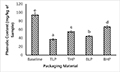
The phenolic content of the stored flour varied across the packing material and was significantly lower when compared with the phenolic content of the baseline (flour before packaging and storage). At 4 weeks of storage, flour stored in TLP, THP, BLP and BHP recorded values of 36.86, 54.98, 44.23 and 66.34 mg/kg respectively (Figure 2).
|
Figure 2 The Phenol content of the packaged and stored plantain flour compared with the baseline Image caption: Bars with the same superscript letter are not significantly different (P > 0.05) according to Duncan’s multiple range test. TLP: Transparent Low-Density Polyethylene, THP: Transparent High-Density Polyethylene, BLP: Black Low-Density Polyethylene, BHP: Black High-Density Polyethylene |
The effects of colour and thickness of polyethylene packs on the retention of Fe, P, Ca and Zn in stored plantain flour are described in Table 2. The results show that mineral contents of the stored plantain flour decreases with time. Moreover, flour packed in BHP recorded 1.11, 697.27 and 20.5 mg/kg values of Fe, P and Ca respectively. The calcium and phosphorus retained in flour stored in BHP were significantly higher. Similarly, the Zn retention in the flour stored in TLP polyethylene is significantly higher than Zn contents of flour stored in THP, BLP and BHP. The amount of Zn retained in flour stored in THP, BLP and BHP were 0.92, 0.10 and 0.73 mg/kg respectively.
|
Table 2 The mineral content of the packaged and stored plantain flour compared with the baseline Note: Means followed by the same superscript letter within the same column are not significantly different (P > 0.05) according to Duncan’s multiple range test. TLP: Transparent Low-Density Polyethylene, THP: Transparent High-Density Polyethylene, BLP: Black Low-Density Polyethylene, BHP: Black High-Density Polyethylene |
.png)
3 Discussion
Polyethylene material is widely used as a mechanical barrier to micro-organisms and macro-organisms causing spoilage to food. Polyethylene also provides a barrier to some abiotic materials such as light, wind, water etc. that are capable of causing spoilage to food. The characteristics of the polyethylene may have direct significant effects on the protective properties of stored food. Luangtana-anan et al. (2017) reported an enhancement of moisture protective properties and stability of pectin via plastic protection. The investigation of the different properties of polyethylene revealed that the properties of the polyethylene have different effects on the retention of the nutritional composition of the stored plantain flour. Vitamin A retention in the plantain flour was favored by transparent low-density polyethylene (TLP). The heat production of TLP might be lower when compared to other polyethylene types considered for storage and this might have contributed to the retention of vitamin A in the flour stored in it. This observation is consistent with the report of Anand et al. (2022), who reported that plant vitamin A, β-carotene are heat-labile therefore its preservation must be in low heat environment. Black high-density polyethylene retains the highest amount of vitamin B6. Plant vitamin B6 (pyridoxine) has been reported to be light sensitive (Gorelova et al., 2022). The black colour of the BHP might have aided the barrier of the plastic to light energy to preserve pyridoxine better than the other types of the polyethylene examined.
Vitamin B9 (folate) is highly water-soluble and is important for DNA synthesis and cell division. The observation of the preservation of folate in the plantain flour packaged in THP (showed the highest folate retention) is slightly contradictory to the report of Liu et al. (2022) who reported that folate is sensitive to photooxidation. Although THP might have favoured folate preservation via heat reduction; owing to the fact that transparent materials could be poor radiator of heat energy (Salimian and Onwukwe, 2023).
Increase in antioxidant activities was also observed in all the polyethylene used (observed through increase in DPPH). High density of the polyethylene could have influenced the production of DPPH positively thereby extending the shelf life of the stored flour. A report by Rojas‐Lema et al. (2021) indicated that high density polyethylene favors antioxidant activities in stored food. Although the antioxidant activities were observed to an increase in all plantain flour samples packed in polyethylene, it was also observed that the phenolic content of the flour reduced greatly. The phenol in the flour might have been highly susceptible to degradation forming new products in the period of storage in the polyethylene, this could have resulted in the reduction in its quantity (Rojas‐Lema et al., 2021). Similarly, Liang et al. (2023) reported a significant decrease in the phenolic contents of some fermented foods in the process of antioxidant activities in food. The increase in the DPPH could have also been as a result of some of the products from the breakdown of phenolic compounds involvement in the scavenging activities of free radicals that could cause spoilage of the stored flour (Ali et al., 2022).
Iron, calcium, zinc, and phosphorus are vital minerals essential for human health. Iron is crucial for oxygen transport in the blood and energy metabolism. Calcium supports strong bones and teeth, muscle function, and nerve signaling (Soetan et al., 2010). Zinc plays a key role in immune function, wound healing, and enzyme activity. Phosphorus is important for bone mineralization, energy production through ATP, and cell membrane integrity. Adequate intake of these minerals through food is necessary to prevent deficiencies, support growth, maintain physiological functions, and promote overall well-being (Serna and Bergwitz, 2020). The preservation of iron, calcium and phosphorus in plantain flour was observed to be better in BHP, this might be as a result of the black colour of the BHP reducing photo-oxidation of these elements as earlier reported (Wang et al., 2022).
4 Conclusion
The colour and thickness of polyethylene packaging materials significantly influence the retention of minerals, vitamins, and antioxidant properties of stored plantain flour. Across all treatments, storage resulted in measurable nutrient losses compared with baseline values; however, the extent of degradation varied with packaging characteristics. Transparent low-density polyethylene (TLP) favoured the retention of vitamin A and zinc and exhibited the highest DPPH antioxidant activity, suggesting enhanced radical scavenging potential under this packaging condition. In contrast, black high-density polyethylene (BHP) provided superior protection for vitamin B6 and key minerals such as iron, calcium, and phosphorus, highlighting the role of increased thickness and reduced light permeability in limiting nutrient degradation. Vitamin B9 was best preserved in transparent high-density polyethylene (THP), indicating that both density and optical properties interact to affect nutrient stability. Although antioxidant activity increased during storage, a concurrent decline in total phenolic content suggests phenolic degradation or transformation into other antioxidant compounds over time. Overall, the findings confirm that no single packaging material optimally preserves all nutrients; rather, packaging choice should be guided by the target nutritional components of interest. The study underscores the importance of selecting appropriate polyethylene colour and thickness to enhance shelf life, maintain nutritional quality, and support food security in plantain flour processing and storage systems, particularly in low-resource settings.
5 Materials and Methods
The unripe French plantain (Musa paradisiaca) fruits used for this research were of the same species and sourced from a local farm at Ikere, Ekiti State, Nigeria. The French plantain is called “Ogede agbagba” in Yoruba language. It is characterized by a complete, dense bunch carrying many hands and numerous smaller fingers, topped with a large, persistent male bud at maturity (Orluchukwu and Ogburia, 2014). The fruits were carefully sorted so that those used for the experiment were devoid of visible phytopathogenic defects and of length 20 ± 5 cm. The fruits were manually de-skinned, and the remaining pulp matrices were systematically sliced into small pieces to accelerate sun drying. The pulp slices were subjected to conventional open-air solar drying until they reached constant weight equilibrium and were subsequently pulverized using a heavy-duty 750-watt Solitaire Mixer Grinder. The powder was allowed to be thermally stable to ambient temperature. The resulting flour was passed through a standard 250 µm sieve to remove extraneous particulate matter, fibrous fractions, and oversized plantain particles.
5.1 Experimental design and storage conditions
The packaging bags used for this experiment were of polythene materials and measured 15 cm by 15 cm. The bags were categorized into four distinct groups based on pigment profile (transparent and black) and thickness {0.03 mm (low-density polyethylene) and 0.15 mm (high-density polyethylene)}. The bags were divided into four groups: transparent low-density polyethylene (TLP), transparent high-density polyethylene (THP), black low-density polyethylene (BLP) and black high-density polyethylene (BHP). Aliquots of 50 g of the processed plantain flour were measured using electronic scale weighing balance (LCD type) and transferred into each type of polythene bag in triplicates, making a total of 12 bags of 50 g plantain flour. Samples of the flour were analyzed for minerals (Fe, Ca, Zn and P), vitamins (A, B6 and B9) and antioxidant properties (total phenolic content (TPC) and 2,2-diphenyl-1-picrylhydrazyl (DPPH) measurement) at the beginning of the storage, to serve as control/baseline experiments. The packed polythene bags containing 50 g plantain flour were carefully placed on table so that approximately equal amount of white light can reach the twelve bags in the laboratory of Food Science and Technology Department, Bamidele Olumilua University of Education, Science and Technology, Ikere-Ekiti for 4 weeks. At 4 weeks of storage, samples were analyzed for minerals, vitamins and antioxidant properties.
Analytical reagents and polyethylene used were of analytical grade, sourced via Bisolamb Chemical and Pascal Scientific Equipment networks.
5.2 Minerals quantification
From each sample, 10 g was weighed into a crucible and ashed in a furnace at 600 °C for 8 h. The ash obtained was brought to 25 mL with HNO3 0.5 N under continuous stirring until the ash completely dissolved in the acid. Out of the product obtained, 1:10 dilutions were made in order to determine Fe, P, Ca and Zn. Atomic absorption spectrophotometry was used to determine Fe, Ca, and Zn. The determination was made using a “control AA 300” atomic absorption spectrophotometer with C2H2/air flame type. The standard solution was made with distilled water. The quantity of each metal was determined using the formula: Me = mme x (25/mp) x D [mg/kg] where Me = the quantity of metal contained, in mg/kg; mme = the quantity of metal read at the spectrophotometer, in mg/L; 25 = the volume of the solution of HNO3 0.5 N, in mL; mp = the mass of the sample for analysis (10 g), in g; D = the dilution of the sample (1:10) (Nicoleta et al., 2006).
Phosphorus was determined and quantified by UV-Vis spectrophotometry (colorimetric method using Murphy and Riley reagents), and absorbance measurement at 660 nm wavelength. The results were expressed as mg P/kg of flour using a phosphorus standard curve (Salami et al., 2018).
5.3 Vitamins
Vitamin A quantification was done by measuring 0.2 g of the sample, 6 mL of ethanol and 0.6 mL of 5 % KOH into a test tube. The test tube was plugged with cotton wool and boiled for 25 min. 6 mL of distilled water was added. Hexane was then added to the water to separate vitamin A. The absorbance was measured at 400 nm using spectrophotometer (Kumar and Kamboj, 2021).
Also, for vitamin B6 measurement, 0.5 g of the sample was weighed into a test tube. 2 mL of 0.1 M sodium carbonate was added and shaken vigorously for 30 min. 100 mL of Folin was added and then the absorbance was measured at 580 nm using spectrophotometer (Khudhair et al., 2019).
For vitamin B9 measurement, 0.2 g of the sample was measured into a test tube. Two milliliters (2 mL) of KMnO4 was added, and the mixture was left for 1 min. 2 mL of sodium nitrate was added to the mixture followed by 2 mL of 5% HCl, the mixture was shaken gently. 2 mL of sulphuric acid (5%) was then added as well as 2 mL of sodium acetate. The whole mixture was stirred and allowed to stand for 10 min. Finally, 2 mL of Azo dye (0.1%) was added to the mixture and allowed to stand for 10 min. Then the absorbance was measured at 550 nm. The quantity was determined using a standard curve (Najm et al., 2022).
5.4 Antioxidant measurement
The total phenolic content (TPC) in the sample was determined by using the method as described by Folin-Ciocalteu. The phenol in the food sample was extracted using methanol. The extracted mixture was allowed to incubate for 30 min after the addition of 1 mL of Folin-Ciocalteu and 1 mL of 0.5 M Na2CO3. The absorbance of the incubated mixture was measured at 750 nm and expressed in mg gallic acid equivalent (GAE) per gram of flour (Li et al., 2015).
The antioxidant 2,2-diphenyl-1-picrylhydrazyl, 0.5 mL of methanolic extract of plantain flour was mixed with DPPH solution and then kept in a dark place for 30 min (a purple chemical). If antioxidants are present, the purple colour fades. The change in colour was measured to know the antioxidant activity. After 30 min of incubation in the dark, absorbance was measured at 517 nm using a UV-Vis spectrophotometer (Sherma, 2017).
5.5 Statistical analysis
The data obtained from the results of the experiments were subjected to analysis of variance using IBM Statistical Package for the Social Sciences (SPSS) version 27. The means of the three replicates were separated from other treatment for significant difference using Duncan’s multiple range test.
Abbreviations
Baseline: Flour before storage
TLP: Transparent Low-Density Polyethylene
THP: Transparent High-Density Polyethylene
BLP: Black Low-Density Polyethylene
BHP: Black High-Density Polyethylene
DPPH: 2,2-Diphenyl-1-Picrylhydrazyl
Authors’ Contributions
FKO: Conceptualization, Methodology, Validation, Supervision. OSS: Formal analysis, Data curation, Writing—original draft. JI: Methodology, Validation, Formal analysis. OVA: Project administration, finance. MAA: Writing—review & editing. All authors read and approved the submitted version.
Acknowledgments
The authors would like to thank Dr. A.F. Akinbisoye of the department of Food Science and Technology, Bamidele Olumilua University of Education, Science and Technology, Ikere, Ekiti state, Nigeria, for her support during the drying process of the plantain.
Ethical approval
Not applicable.
Consent to participate
Not applicable.
Consent to publication
Not applicable.
Availability of data and materials
The datasets that support the findings of this study are available from the corresponding author upon reasonable request.
Conflict of Interest Disclosure
The authors affirm that this research was conducted without any commercial or financial relationships that could be construed as a potential conflict of interest.
Abiola A., Adégbola Y.P., Zandjanakou-Tachin M., Crinot G.F., and Biaou G., 2024, Toward tailored interventions in plantain (Musa paradisiaca L.) industry: insights from heterogeneity and constraints to plantain-based cropping systems in South-Benin, Social Sciences & Humanities Open, 9: 100895.
https://doi.org/10.1016/j.ssaho.2024.100895
Ajijolakewu K.A., Ayoola A.S., Agbabiaka T.O., Zakariyah F.R., Ahmed N.R., Oyedele O.J., and Sani A., 2021, A review of the ethnomedicinal, antimicrobial, and phytochemical properties of Musa paradisiaca (plantain), Bulletin of the National Research Centre, 45(1): 86.
https://doi.org/10.1186/s42269-021-00549-3
Ali A., Kumar R.R., Vinutha T., Singh T., Singh S.P., Satyavathi C.T., and Goswami S., 2022, Grain phenolics: critical role in quality, storage stability and effects of processing in major grain crops-a concise review, European Food Research and Technology, 248(8): 2197-2213.
https://doi.org/10.1007/s00217-022-04026-7
Anand R., Mohan L., and Bharadvaja N., 2022, Disease prevention and treatment using β-carotene: the ultimate provitamin A, Revista Brasileira de Farmacognosia, 32(4): 491-501.
https://doi.org/10.1007/s43450-022-00262-w
Awol S.M., Kuyu C.G., Bereka T.Y., and Abamecha N., 2024, Physicochemical stability, microbial growth and sensory quality of refined wheat flour as affected by packaging materials during storage, Journal of Stored Products Research, 105: 102217.
https://doi.org/10.1016/j.jspr.2023.102217
Emmanuel J.K., Mtashobya L.A., and Mgeni S.T., 2025, Potential contributions of banana fruits and residues to multiple applications: an overview, Natural Product Communications, 20(2): 1934578X251320151.
https://doi.org/10.1177/1934578X251320151
Garavito J., Peña-Venegas C.P., and Castellanos D.A., 2024, Production of starch-based flexible food packaging in developing countries: analysis of the processes, challenges, and requirements, Foods, 13(24): 4096.
https://doi.org/10.3390/foods13244096
Gorelova V., Colinas M., Dell'Aglio E., Flis P., Salt D.E., and Fitzpatrick T.B., 2022, Phosphorylated B6 vitamer deficiency in SALT OVERLY SENSITIVE 4 mutants compromises shoot and root development, Plant Physiology, 188(1): 220-240.
https://doi.org/10.1093/plphys/kiab475
Hemery Y.M., Fontan L., Laillou A., Jallier V., Moench-Pfanner R., Avallone S., and Berger J., 2020, Influence of storage conditions and packaging of fortified wheat flour on microbial load and stability of folate and vitamin B12, Food Chemistry: X, 5: 100076.
https://doi.org/10.1016/j.fochx.2019.100076
Khudhair A.F., Saeed S.I., Marhoon A.A., and Alesary H.F., 2019, A new spectrophotometric method to determine vitamin B6 in pharmaceutical formation samples using a micelle form, Journal of Physics: Conference Series, IOP Publishing, 1234(1): 012087.
https://doi.org/10.1088/1742-6596/1234/1/012087
Kumar A., and Kamboj M., 2021, A review on photometric methods for the quantitation of vitamin A, Microchemical Journal, 171: 106791.
https://doi.org/10.1016/j.microc.2021.106791
Lalita A.W., Hamad R., Manik S., and Mohapatra D., 2025, Processing-mediated changes, In: Purewal S.S., and Singh R.S. (eds.), Colored Cereals: Properties, Processing, Health Benefits, and Industrial Uses, CRC Press, Florida, USA, pp.170-194.
https://doi.org/10.1201/9781003454922-8
Li Y., Ma D., Sun D., Wang C., Zhang J., Xie Y., and Guo T., 2015, Total phenolic, flavonoid content, and antioxidant activity of flour, noodles, and steamed bread made from different colored wheat grains by three milling methods, The Crop Journal, 3(4): 328-334.
https://doi.org/10.1016/j.cj.2015.04.004
Liang Z., Huang Y., Zhang P., and Fang Z., 2023, Impact of fermentation on the structure and antioxidant activity of selective phenolic compounds, Food Bioscience, 56: 103147.
https://doi.org/10.1016/j.fbio.2023.103147
Liu Z., Farkas P., Wang K., Kohli M.O., and Fitzpatrick T.B., 2022, B vitamin supply in plants and humans: the importance of vitamer homeostasis, The Plant Journal, 111(3): 662-682.
https://doi.org/10.1111/tpj.15859
Luangtana-anan M., Soradech S., Saengsod S., Nunthanid J., and Limmatvapirat S., 2017, Enhancement of moisture protective properties and stability of pectin through formation of a composite film: effects of shellac and plasticizer, Journal of Food Science, 82(12): 2915-2925.
https://doi.org/10.1111/1750-3841.13956
Mundéné-Timothée J.L., Nouga Bissoue A., Nguimbou R.M., Bissim S.M., Bouelet Ntsama I.S., Bouopda Tamo S.P., Fokam L., Mouangue R., and Njintang Yanou N., 2025, Plantain flour: production processes, technological characteristics, and its potential use in traditional African dishes-a review, Journal of the Science of Food and Agriculture, 105(9): 4741-4752.
https://doi.org/10.1002/jsfa.13900
Najm M.A., Abd-Alrassol K.S., Qasim Q.A., Hussein H.H., and AL-Salman H.N.K., 2022, Spectrophotometric determination of folic acid using 1, 10-phenanthroline materials with ninhydrin reagent, Materials Today: Proceedings, 61: 865-872.
https://doi.org/10.1016/j.matpr.2021.09.453
Nicoleta R.D., Gherhen I., and Furdi F., 2006, Determination of the metal content in some flours and pastes obtained from different wheat species, Buletin USAMV-CN, 62: 343-345.
Ofosu D.O., Martinson F., Frimpong G.K., Asare I.K., and Darfour B., 2023, Pre-harvest and post-harvest practices along the plantain (Musa spp. AAB) fruit value chain in Ghana that predispose them to ripening, Ghana Journal of Agricultural Science, 58(2): 75-82.
Oladele E.O.P., and Adefegha S.A., 2022, Plantain bioactives: an underutilised food resource in Africa, In: Babalola O.O., Ayangbenro A.S., and Ojuederie O.B. (eds.), Food security and safety volume 2: African perspectives, Springer International Publishing, Cham, Switzerland, pp.187-211.
https://doi.org/10.1007/978-3-031-09614-3_9
Orluchukwu J.A., and Ogburia M.N., 2014, The relationship of growth and yield components of different plantain (Musa spp.) cultivars in a humid area of southern Nigeria, Advances in Life Sciences, 4(2): 37-43.
Oyeyinka B.O., and Afolayan A.J., 2020, Potentials of Musa species fruits against oxidative stress-induced and diet-linked chronic diseases: in vitro and in vivo implications of micronutritional factors and dietary secondary metabolite compounds, Molecules, 25(21): 5036.
https://doi.org/10.3390/molecules25215036
Pathare P.B., and Al-Dairi M., 2022, Effect of mechanical damage on the quality characteristics of banana fruits during short-term storage, Discover Food, 2(1): 4.
https://doi.org/10.1007/s44187-022-00007-7
Rojas-Lema S., Lascano D., Ivorra-Martinez J., Gomez-Caturla J., Balart R., and Garcia-Garcia D., 2021, Manufacturing and characterization of high-density polyethylene composites with active fillers from persimmon peel flour with improved antioxidant activity and hydrophobicity, Macromolecular Materials and Engineering, 306(11): 2100430.
https://doi.org/10.1002/mame.202100430
Rotimi D.E., and Adeyemi O.S., 2023a, Comparative evaluation of the antioxidant activity, trace elements, and phytochemical analysis of the extracts of unripe plantain whole fruit and pulp, Karbala International Journal of Modern Science, 9(2): 2.
https://doi.org/10.33640/2405-609X.3290
Rotimi D.E., and Adeyemi O.S., 2023b, Plantain-based diet decreases oxidative stress and inflammatory markers in the testes of rats exposed to atrazine, Molecular and Cellular Biochemistry, 478(9): 2041-2056.
https://doi.org/10.1007/s11010-022-04639-2
Saha N.C., Ghosh A.K., Garg M., and Sadhu S.D., 2022, Flexible packaging material-manufacturing processes and its application, In: Saha N.C., Ghosh A.K., Garg M., and Dey Sadhu S. (eds.), Food packaging: materials, techniques and environmental issues, Springer Nature Singapore, Singapore, pp.47-87.
https://doi.org/10.1007/978-981-16-4233-3_2
Salami O.S., Akomolafe O.M., and Olufemi-Salami F.K., 2018, Quantification of cyanide and major nutrients of soil around cassava (Manihot esculenta C.) processing industries within Akure, Ondo State, Southwest Nigeria, Molecular Soil Biology, 9(2): 12-17.
https://doi.org/10.5376/msb.2018.09.0002
Salimian A., and Onwukwe U., 2023, Development of a transparent thermal reflective thin film coating for accurate separation of food-grade plastics in recycling process via AI-based thermal image processing, Coatings, 13(8): 1332.
https://doi.org/10.3390/coatings13081332
Sarkar S., and Kuna A., 2020, Food packaging and storage, In: Singh P., and Saini V. (eds.), Research trends in home science and extension, AkiNik Publications, New Delhi, India, 3: 27-51.
Serna J., and Bergwitz C., 2020, Importance of dietary phosphorus for bone metabolism and healthy aging, Nutrients, 12(10): 3001.
https://doi.org/10.3390/nu12103001
Sherma J., 2017, Studies on the antioxidant activity of foods and food ingredients by thin-layer chromatography-direct bioautography with 2, 2'-diphenyl-1-picrylhydrazyl radical (DPPH*), In: Grinberg N., and Carr P.W. (eds.), Advances in chromatography, CRC Press, Florida, USA, pp.229-244.
https://doi.org/10.1201/9781315158075-9
Soetan K.O., Olaiya C.O., and Oyewole O.E., 2010, The importance of mineral elements for humans, domestic animals and plants: a review, African Journal of Food Science, 4(5): 200-222.
Solano A.C.V., and de Gante C.R., 2014, Development of biodegradable films based on blue corn flour with potential applications in food packaging. Effects of plasticizers on mechanical, thermal, and microstructural properties of flour films, Journal of Cereal Science, 60(1): 60-66.
https://doi.org/10.1016/j.jcs.2014.01.015
Taak K., and Awasthi M., 2025, Plantain as a functional food: a comprehensive review of its nutritional and therapeutic attributes, Advances in Food Sciences, 47(1): 2-8.
Udomkun P., Masso C., Swennen R., Innawong B., Fotso Kuate A., Alakonya A., Lienou J., Ibitoye D.O., and Vanlauwe B., 2021, Consumer preferences and socioeconomic factors decided on plantain and plantain-based products in the central region of Cameroon and Oyo State, Nigeria, Foods, 10(8): 1955.
https://doi.org/10.3390/foods10081955
Wang A., Ma S., Zhu Y., Zou L., and Zhao G., 2022, Evaluation of photo-oxidation in full-fat milk under different light spectra: a laboratory experiment in food chemistry, Journal of Chemical Education, 99(3): 1420-1427.
https://doi.org/10.1021/acs.jchemed.1c00650




. PDF(431KB)
. FPDF(win)
. FPDF(mac)
. HTML
. Online fPDF
Associated material
. Readers' comments
Other articles by authors
. Folasade Kemisola Olufemi-Salami

. Olufemi Samson Salami
. John Isa
. Omolola Victoria Adefela
. Mary Anuoluwapo Ajatta
Related articles
. Polyethylene
. Color
. Vitamins
. Antioxidant activities
. Plantain flour
Tools
. Email to a friend
. Post a comment